






Ever wondered where Iceland is on the map? Spoiler alert: it’s not where you left your keys! Nestled between Greenland and Norway, this stunning island nation is often overshadowed by its fiery reputation and icy landscapes. But don’t let the name fool you—this place is a hotbed of adventure and breathtaking beauty.
Overview of Iceland’s Geography
Iceland is located in the North Atlantic Ocean, positioned between Greenland and Norway. This island nation sits just south of the Arctic Circle, making it a part of both the Scandinavian region and the North Atlantic cultural sphere. Its coordinates are approximately 64° N latitude and 18° W longitude.
The country showcases diverse geographical features, including glaciers, volcanoes, geysers, hot springs, and lava fields. More than 10% of Iceland’s land area is covered by glaciers, with Vatnajökull being the largest. Volcanoes like Hekla and Eyjafjallajökull contribute to Iceland’s dynamic landscape, presenting both natural beauty and geological significance.
Surrounding the island, the Atlantic Ocean influences its climate, which experiences cool temperatures and frequent precipitation. Coastal areas enjoy milder weather, while the interior retains colder conditions due to its elevation. Natural resources thrive here, including geothermal energy, which powers heating and electricity for many residents.
Iceland’s distinct geographical position also leads to unique ecosystems. The nation hosts various species of birds, including puffins, along with numerous migratory species. Additionally, its marine life, including fish and whales, flourishes in the waters surrounding the island.
Overall, Iceland’s geography combines various phenomena, creating a landscape rich in natural beauty and resources. The interplay of ice and fire, a defining characteristic of the nation’s environment, continues to draw visitors fascinated by its rugged terrains and stunning vistas.
Locating Iceland on the World Map
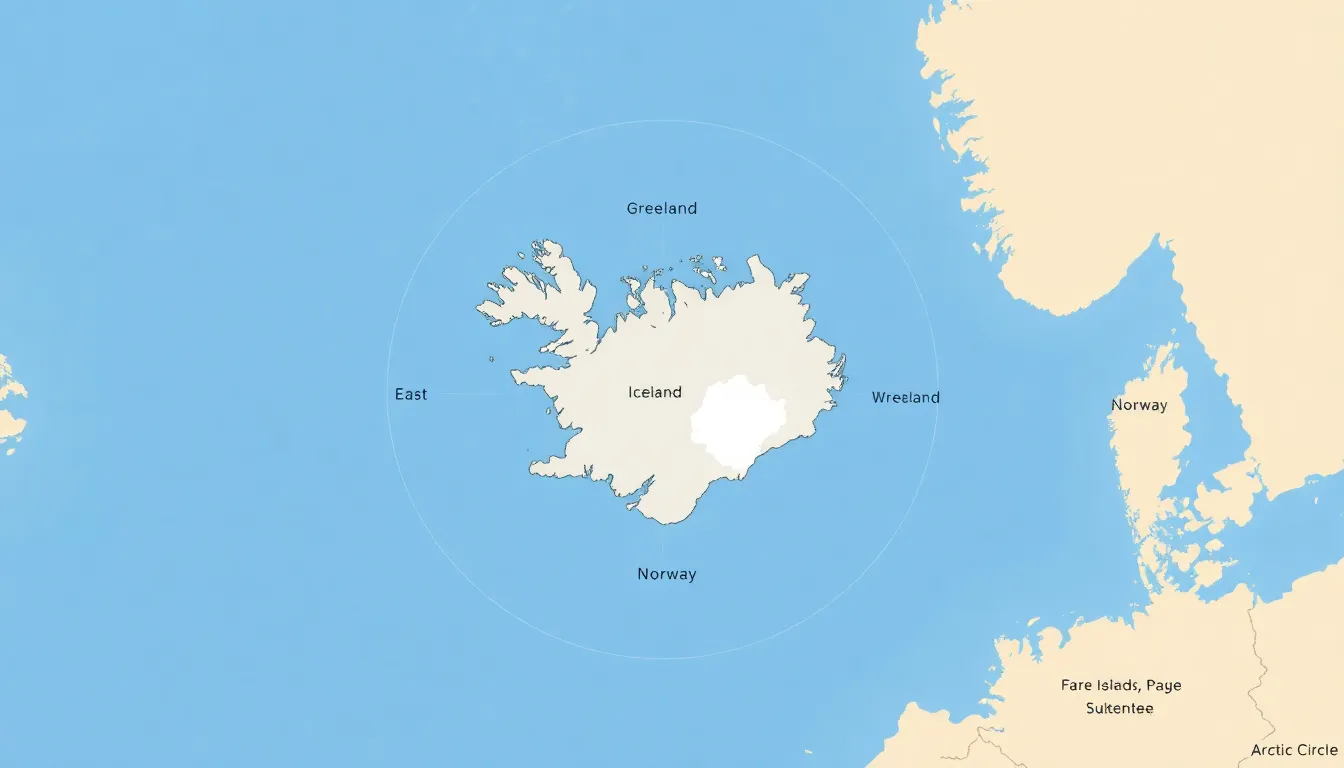
Iceland sits in the North Atlantic Ocean, bordered by Greenland to the west and Norway to the east. Its strategic position highlights its unique geographical significance.
Proximity to Other Countries
Iceland’s closest neighbor is Greenland, located about 250 miles (400 kilometers) to the west. Norway stands approximately 600 miles (1,000 kilometers) to the east. The Faroe Islands lie around 320 miles (515 kilometers) southeast, adding to its proximity to other northern territories. Located near the Arctic Circle, Iceland serves as a bridge between North America and mainland Europe. It plays a crucial role in transatlantic connections, with frequent flight routes to both regions.
Geographic Coordinates
Iceland’s geographic coordinates are approximately 64.9631° N latitude and 19.0208° W longitude. These coordinates place Iceland just south of the Arctic Circle, highlighting its northern latitude. The positioning contributes to its unique climate and ecosystems. Located at the boundary of the North American and Eurasian tectonic plates, Iceland experiences significant geological activity. This results in its stunning landscapes marked by volcanoes, geysers, and hot springs.
Iceland’s Position in the North Atlantic
Iceland occupies a significant location in the North Atlantic Ocean, bridging North America and mainland Europe. Its unique geographic position lends itself to various advantages.
Importance of Strategic Location
Iceland serves as a vital link between major continents, facilitating air and maritime routes. This strategic placement attracts shipping traffic and tourism, enhancing its economy. Approximately 250 miles west, Greenland stands as Iceland’s closest neighbor, while Norway lies around 600 miles to the east. The nearby Faroe Islands, located 320 miles southeast, further emphasize Iceland’s central position in the region. Given its accessibility, Iceland becomes an essential point for scientific research and environmental monitoring in the North Atlantic.
Climate Influences Due to Location
Iceland’s climate experiences notable influences from its oceanic surroundings. The North Atlantic Ocean moderates temperatures, leading to relatively cool weather year-round. Ocean currents maintain these temperature patterns, contributing to frequent precipitation. Distinct seasons emerge, affecting natural ecosystems and wildlife habitats. Almost 10% of the country remains covered by glaciers, sustaining various glacial environments. Unique climatic conditions support diverse flora and fauna, with numerous birds and marine species thriving in these habitats. Overall, Iceland’s location results in a rich interplay between oceanic currents and atmospheric patterns.
Cultural and Historical Significance
Cultural heritage in Iceland reflects its rich Viking history. Settlements date back to the late 9th century, establishing a foundation that influences modern society. Language and literature thrive in Iceland, with the Old Norse sagas showcasing its historical narratives. These texts, originating from 13th-century manuscripts, highlight the island’s lore and cultural identity.
Iceland’s historical significance extends to its unique governance. The Althing, established in 930 AD, is one of the oldest parliaments in the world. It serves as a symbol of democratic ideals, fostering legislation and community decision-making for centuries.
In addition to literature and governance, Iceland has a vibrant tradition of arts and crafts. Handicrafts, such as knitting and weaving, reflect the adaptability and resourcefulness of Icelandic society. Many artisans continue practices passed down through generations, celebrating local materials and techniques.
Geothermal energy is another cultural cornerstone in Iceland. Harnessed since the early 20th century, it has transformed daily life and supported sustainability initiatives. Communities rely on geothermal resources for heating and electricity, showcasing innovation in energy use.
Festivals throughout the year further highlight Iceland’s cultural landscape. Events like Þorrablót, celebrating midwinter, and the Reykjavik Arts Festival, showcase traditional food and contemporary art. These occasions foster community spirit and attract tourists, emphasizing Iceland’s dynamic culture.
The country’s connection to nature plays a significant role in its identity. Landscapes inspire spirituality and creativity, manifesting in various art forms. Nature’s raw beauty, from volcanic formations to scenic fjords, captivates residents and visitors alike, amplifying its cultural significance.
Iceland’s unique geographical position and rich cultural heritage make it a fascinating destination. Nestled between Greenland and Norway in the North Atlantic, it offers a blend of stunning natural landscapes and vibrant traditions. The interplay of glaciers and volcanic activity creates a dynamic environment that attracts adventurers and researchers alike.
With its strategic location facilitating travel and trade, Iceland continues to thrive economically and culturally. The island’s commitment to sustainability and community reflects its deep connection to nature. As travelers explore its breathtaking vistas and immerse themselves in its rich history, they discover that Iceland is not just a place on the map, but a remarkable experience waiting to be uncovered.