

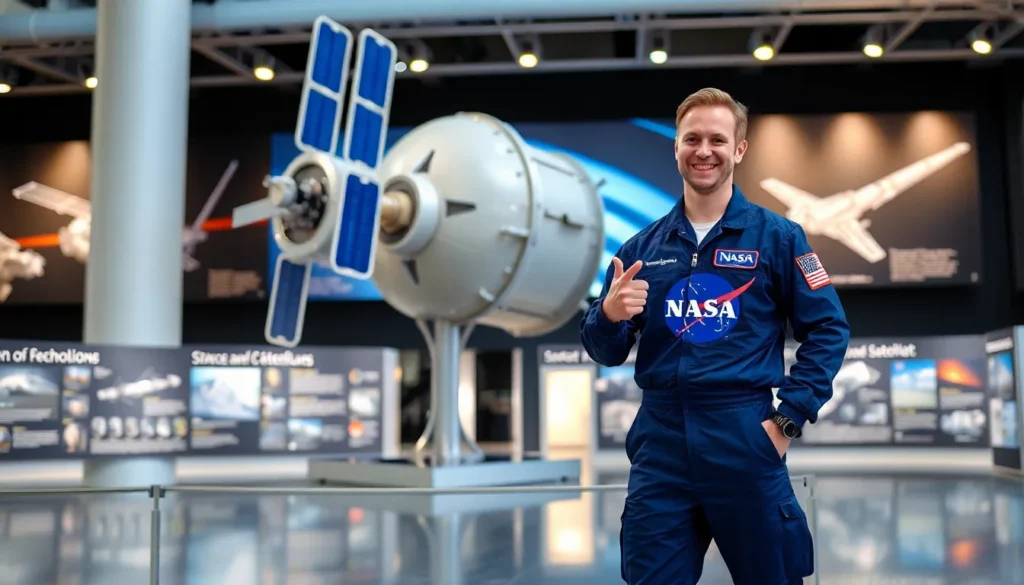



Space technology isn’t just for astronauts and sci-fi enthusiasts anymore. It’s a fascinating realm that influences our everyday lives, from the GPS in our cars to the weather forecasts we rely on. Imagine a world where satellites dance around the Earth, sending signals that help us navigate, communicate, and even predict the weather. Sounds like something out of a movie, right? But it’s real, and it’s happening all around us.
At its core, space technology encompasses the tools and systems developed for exploring and utilizing outer space. It’s the brainchild of brilliant minds who’ve turned dreams of interstellar travel into reality. So whether you’re a space geek or just someone who enjoys a good stargaze, understanding space technology opens up a universe of possibilities that could make anyone feel like they’re part of something much bigger than themselves.
What Is Space Technology?
Space technology encompasses the tools, systems, and methods developed for exploring, utilizing, and understanding outer space. This field includes the design and operation of satellites, spacecraft, and instruments used for data collection and research.
Definition and Overview
Space technology refers to the innovations and materials used in the exploration and utilization of space. This includes everything from propulsion systems that launch rockets to satellites that facilitate communication and Earth observation. These technologies support various applications such as GPS navigation, weather forecasting, and scientific research.
History of Space Technology
The history of space technology traces back to the early 20th century. Early pioneers like Konstantin Tsiolkovsky laid the groundwork for rocketry with their theories on space travel. In 1957, the launch of Sputnik 1 marked the beginning of the Space Age. The development of NASA’s Apollo program in the 1960s further advanced technology with human missions to the Moon. Throughout the decades, advancements in satellite technology led to enhanced global communication and weather monitoring capabilities.
Types of Space Technology
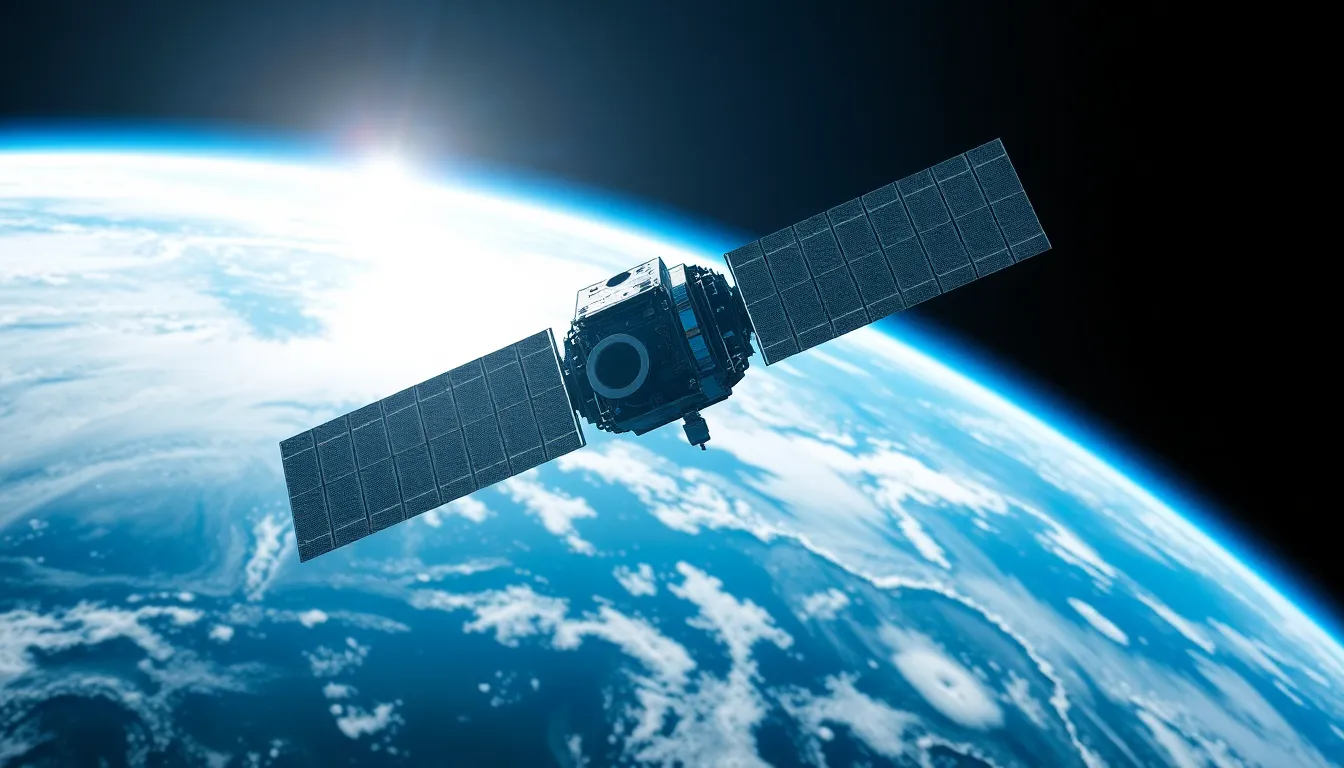
Space technology encompasses various systems and tools that enable exploration and utilization of outer space.
Satellites
Satellites enhance global communication, navigation, and weather forecasting. They orbit Earth, providing critical data for services such as GPS and meteorology. Various types exist, including geostationary satellites, which remain fixed over a specific area, and low Earth orbit satellites, which offer enhanced detail for imaging. Communications satellites facilitate broadcasting and internet services, while weather satellites monitor atmospheric conditions and predict climate patterns. Innovative designs and advanced materials improve satellite functionality and durability.
Spacecraft
Spacecraft are vehicles designed for travel or operations in outer space. They include crewed and uncrewed types, each serving distinct purposes. Crewed spacecraft enable human exploration, as seen in NASA’s Orion and SpaceX’s Crew Dragon. Uncrewed spacecraft often conduct research, discovering distant celestial bodies or performing scientific experiments in orbit. Rover technology, such as NASA’s Perseverance on Mars, exemplifies developments in autonomous exploration. Continued advancements in propulsion systems and life support technologies drive the evolution of spacecraft, enhancing mission capabilities.
Space Probes
Space probes explore regions of space beyond Earth’s orbit without direct human control. They gather invaluable data about planets, moons, and other celestial phenomena. Notable examples include Voyager 1 and 2, which provided insights into the outer planets and now venture into interstellar space. Newer missions, such as the Parker Solar Probe, study solar activity and its effects on the solar system. Probes often incorporate sophisticated scientific instruments, enabling them to analyze atmospheric compositions and surface conditions of celestial bodies. Each mission expands understanding of the universe and its dynamics.
Applications of Space Technology
Space technology encompasses a variety of applications that profoundly benefit society. These applications span fields such as communication, weather monitoring, and exploration.
Communication
Satellites play a pivotal role in facilitating global communication. They enable television broadcasts, internet connections, and mobile phone networks. Geostationary satellites maintain a fixed position over the Earth, allowing constant connectivity. Low Earth orbit satellites enhance data transfer speeds and reduce latency. Innovations in communication technology continue to expand access to information, bridging gaps between remote regions and urban centers.
Weather Monitoring
Weather forecasts rely heavily on data gathered by satellites. These instruments collect information on temperature, humidity, and atmospheric pressure, providing accurate predictions. Satellite imagery enhances the understanding of storm systems, enabling timely warnings for severe weather events. Doppler radar, complemented by satellite data, tracks precipitation and wind patterns. This combination improves disaster preparedness and response strategies, saving lives and minimizing property damage.
Exploration
Exploration missions utilize space probes to gather crucial data about celestial bodies. Probes like Voyager and Parker Solar Probe venture beyond Earth’s orbit, revealing insights into planets, asteroids, and the Sun. They help scientists understand the formation and evolution of our solar system. Lunar landers, like those from NASA’s Artemis program, aim to return humans to the Moon. Continuous advancements in exploration technology promise to unlock further secrets of the universe, fostering deeper connections with our cosmic surroundings.
Future Trends in Space Technology
Emerging technologies shape the future of space exploration and utilization. Innovations in artificial intelligence enhance spacecraft operations. Geospatial data integration improves satellite monitoring and navigation accuracy. Advancements in reusable rocket technology reduce launch costs significantly.
Collaborative international missions are gaining traction, with countries partnering to share resources and expertise. This collaboration fosters larger and more ambitious projects, like lunar bases and Mars missions. 3D printing in space revolutionizes manufacturing capabilities, allowing astronauts to create tools and parts on-site.
Sustainable practices are increasingly prioritized in space technology. Efforts focus on minimizing space debris while promoting satellite lifespan extension. Next-generation propulsion systems, such as ion drives, allow for more efficient travel within the solar system.
Expanding private sector involvement accelerates innovation. Companies like SpaceX and Blue Origin drive advancements in launch systems and payload capabilities. Public interest grows around space tourism, opening new markets for commercial enterprises.
Enhanced data analytics transform how scientists interpret information from space missions. Machine learning models process vast quantities of astronomical data more efficiently. In addition, advancements in quantum computing promise breakthroughs in simulations and calculations relevant to space research.
The realm of human spaceflight is evolving through new space habitats. Innovations enable long-duration missions with improved life support systems. Future missions to Mars and beyond may facilitate permanent human settlements on other planets.
Continuous advancements in communications technology enhance data transfer speeds between Earth and spacecraft. High-frequency laser systems may replace traditional radio waves, increasing the volume of information exchanged. Future trends signal a rapidly evolving landscape, where space technology will play a crucial role in humanity’s exploration and understanding of the universe.
Space technology is more than just a fascinating field of study; it’s a vital part of modern life. From the satellites that connect people worldwide to the probes that explore distant planets, these innovations shape daily experiences and expand understanding of the universe. As advancements continue to emerge, the implications for communication, exploration, and sustainability are profound.
The future of space technology promises exciting developments that will further bridge the gap between humanity and the cosmos. Embracing this journey not only enhances scientific knowledge but also inspires future generations to dream big and reach for the stars.