







When it comes to measuring space, confusion often reigns supreme. Ever found yourself staring blankly at a box labeled in cubic inches, wondering if it can fit your prized collection of vintage comic books? Fear not! Converting cubic inches to cubic feet is easier than finding a cat video on the internet.
Understanding Volume Measurements
Volume measurements indicate the amount of three-dimensional space an object occupies. Cubic inches and cubic feet serve as common units in this domain. Cubic inches denote smaller volumes, while cubic feet represent larger volumes, typically in containers like boxes.
Converting cubic inches to cubic feet requires simple mathematics. One cubic foot equates to 1,728 cubic inches. This relationship simplifies the conversion process. To convert cubic inches to cubic feet, divide the number of cubic inches by 1,728.
For example, a box with a volume of 3,456 cubic inches represents 2 cubic feet when calculated (3,456 ÷ 1,728 = 2). Understanding this conversion helps people determine whether items, such as vintage comic books, fit within designated spaces.
Visualizing the conversion aids comprehension. Picture a medium-sized box filled with various items. If it measures 2 cubic feet, it holds 3,456 cubic inches. Knowing these figures makes decision-making regarding storage options easier.
Practicing with various examples can reinforce understanding. Calculate the cubic footage of different items to become familiar with the conversion method. It’s helpful to reference an online converter for quick measurements when necessary.
Equipped with this knowledge, individuals can confidently make informed choices about storage and fitting objects into specified areas. Mastering volume measurements enhances overall spatial awareness in everyday life.
Conversion Basics
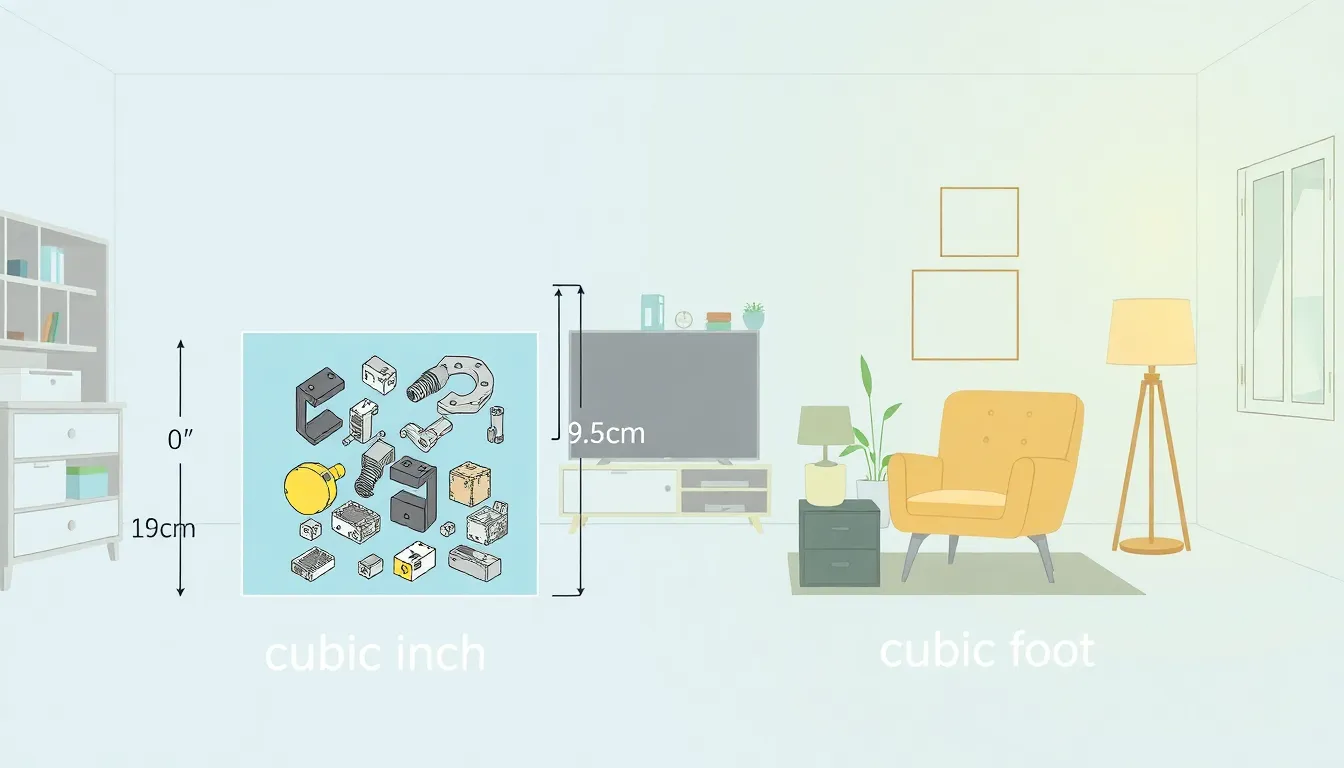
Understanding volume measurements involves knowing the difference between cubic inches and cubic feet. Each unit serves a unique purpose in quantifying space.
What Is Cubic Inch?
A cubic inch represents a volume that fits within a cube measuring one inch on each side. This measurement is crucial in industries like manufacturing, where precision matters. Many items, such as intricate hardware components, are measured in cubic inches to ensure accurate specifications. Each cubic inch equals about 16.39 cubic centimeters. Thus, smaller containers often use this unit while dealing with tailored storage needs.
What Is Cubic Foot?
A cubic foot signifies the volume of a cube with one-foot dimensions on all sides. This unit typically applies to larger spaces, such as rooms and storage areas. One cubic foot corresponds to 1,728 cubic inches, making quick conversions manageable. Common examples include furniture and appliances, often described using cubic feet to facilitate understanding of their size. Recognizing cubic feet also aids in planning for larger items within designated spaces.
How to Convert Cu In to Cu Ft
Converting cubic inches to cubic feet involves a simple mathematical process that can be easily understood. Recognizing this conversion aids in better planning for space requirements.
The Conversion Formula
The formula for converting cubic inches to cubic feet is straightforward. Divide the number of cubic inches by 1,728. This number represents the volume of one cubic foot expressed in cubic inches. For example, if an object has a volume of 5,184 cubic inches, dividing 5,184 by 1,728 equals 3 cubic feet. This conversion makes it easy to visualize the total space occupation.
Step-by-Step Conversion Process
Follow these steps for an accurate conversion from cubic inches to cubic feet. First, determine the volume in cubic inches. Next, utilize the formula by dividing that number by 1,728. For instance, if a box measures 1,150 cubic inches, divide it by 1,728. The result is approximately 0.665 cubic feet. This process provides a clear understanding of the required space for the object in cubic feet.
Practical Applications
Understanding the conversion from cubic inches to cubic feet proves useful in various scenarios. The clarity this knowledge brings enables better planning and organization in spaces.
Use in Everyday Life
People frequently encounter cubic inches and cubic feet when shopping for storage solutions. Finding appropriate containers for items like clothing and toys requires this understanding. For instance, a storage bin labeled with a capacity of 1,728 cubic inches equates to precisely one cubic foot. This distinction assists individuals in determining what fits without overestimating space requirements. Small items fit neatly in containers measured in cubic inches, while larger pieces often necessitate cubic feet for accurate representation. Mastering these measures simplifies tasks like packing for moves or organizing garages.
Use in Industry
Industries utilize cubic inches and cubic feet to streamline operations and improve efficiency. In manufacturing, precise measurements ensure that products meet design specifications. For example, machinery might require components measured in cubic inches for accuracy, while shipping containers often specify dimensions in cubic feet. The construction industry frequently employs these measurements when planning spaces, ensuring that rooms meet client specifications. This practice helps prevent costly errors by providing clarity regarding the amount of material needed or space available. Understanding these volume units supports informed decision-making in various professional fields.
Understanding the conversion from cubic inches to cubic feet empowers individuals to make informed decisions about space and storage. By grasping the relationship between these two measurements, one can effectively plan for various needs whether at home or in a professional setting.
Utilizing visual aids and practical examples can further enhance comprehension. With the simple formula of dividing cubic inches by 1,728, anyone can quickly determine the volume of items and optimize their storage solutions.
This knowledge not only aids in everyday tasks but also proves invaluable in industries where precision is key. Mastering these volume measurements ultimately leads to better organization and efficiency in both personal and professional life.