

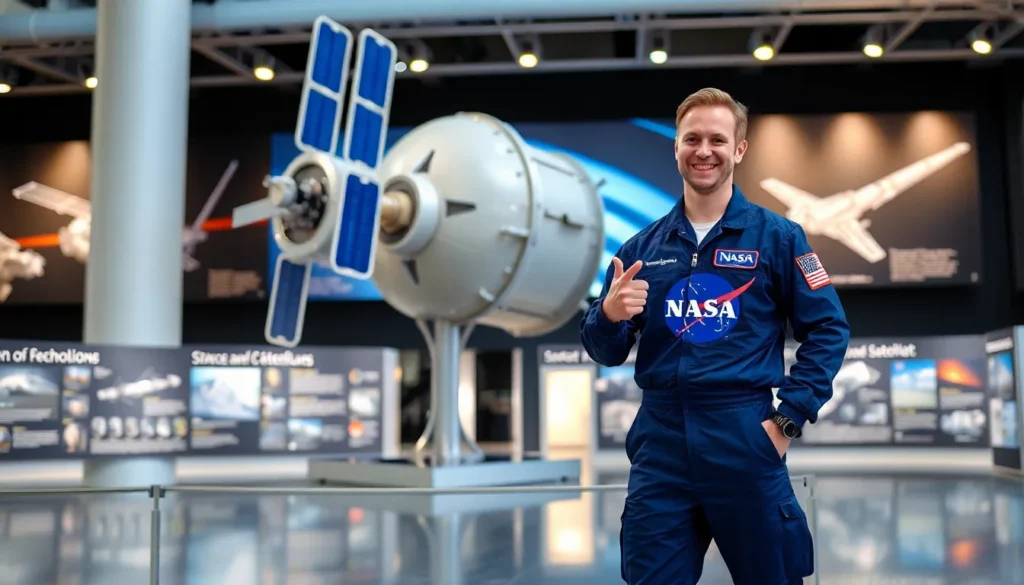





In the vast expanse of the universe, the search for alien life is like hunting for a needle in a cosmic haystack. Yet, scientists and enthusiasts alike are convinced that somewhere out there, intelligent beings are sipping cosmic lattes and pondering their own existence. Who wouldn’t want to join that intergalactic coffee chat?
Overview of Alien Life Searches
Scientists actively conduct searches for alien life using various methods. The exploration focuses on multiple environments, including extreme conditions found on Earth and favorable conditions on other planets. Advances in technology play a significant role in enhancing these searches. For instance, telescopes designed to detect exoplanets identify planets in habitable zones.
One key approach involves analyzing atmospheres of distant planets. Instruments measure gases like oxygen and methane, which can indicate biological processes. Missions such as NASA’s Kepler and TESS have led to the discovery of thousands of exoplanets, boosting interest in potential life beyond Earth.
Additionally, the Search for Extraterrestrial Intelligence (SETI) utilizes radio telescopes to listen for signals from intelligent sources. This program scans the cosmos for artificial radio emissions, seeking signs of advanced civilizations. Recent findings have shown intriguing signals that may warrant further investigation.
Astrobiology combines multiple scientific disciplines to study the potential for life in different environments. Researchers examine extreme organisms on Earth as analogs for extraterrestrial life, uncovering possibilities in harsh environments on Mars or Europa.
In recent years, missions to Mars and spacecraft exploring icy moons have expanded the scope of life searches. The landing of the Perseverance rover on Mars aims to search for microbial life traces and collect samples for future return to Earth.
Ultimately, ongoing alien life searches encompass a myriad of techniques and objectives. Diverse scientific initiatives aid in the understanding of life’s potential forms and support the hypothesis that intelligent extraterrestrial beings may exist.
Historical Context of Alien Life Searches

Alien life searches have evolved significantly over centuries, shaped by scientific inquiry and personal beliefs. This quest stems from humanity’s profound curiosity about existence beyond Earth.
Early Theories and Speculations
Ancient cultures often speculated about celestial beings. For instance, the Greeks posited the idea of life existing in other worlds. In the 19th century, influential thinkers like Camille Flammarion argued for the possibility of inhabited planets. Their ideas sparked interest, leading to the early imagination of extraterrestrial civilizations. By the early 20th century, science fiction literature further fueled public fascination with alien life, introducing various concepts of alien encounters and interstellar civilizations.
Key Milestones in Research
The 1960s marked a pivotal moment for alien life searches with the establishment of the Search for Extraterrestrial Intelligence (SETI). This initiative aimed to detect artificial signals from distant worlds, utilizing radio telescopes for deep-sky scans. In 1976, the Viking landers explored Mars, searching for signs of life, a task that prompted significant debate within the scientific community. The discovery of extremophiles in the late 20th century broadened the understanding of life’s potential in harsh environments. More recently, missions like Kepler and TESS have identified thousands of exoplanets, leading to increased optimism regarding potential alien life. These milestones collectively illustrate the persistent efforts to uncover the secrets of the cosmos.
Modern Approaches to Alien Life Searches
Scientists utilize cutting-edge techniques to enhance the search for alien life across the universe. These modern methods focus on both advanced technology and innovative scientific missions.
Use of Advanced Technology
Robust telescopes play a vital role in the detection of exoplanets within habitable zones. Several instruments, such as the James Webb Space Telescope, allow for in-depth atmospheric analysis of these distant worlds. Scientists search for specific gases like oxygen and methane that can signal biological activity. Moreover, artificial intelligence assists in analyzing vast amounts of data collected from the cosmos. Enhanced imaging techniques provide clearer views of celestial bodies, increasing the likelihood of discovering signs of life.
Scientific Missions and Experiments
NASA’s Perseverance rover exemplifies cutting-edge exploration on Mars, focusing on microbial life evidence. In addition, the rover collects soil samples for potential return to Earth to further examine for evidence of life. Multiple international missions target extreme environments and other celestial bodies like Europa and Enceladus. Collaborative efforts among various space agencies drive research initiatives aimed at understanding life’s limits on Earth and beyond. Equipped with advanced instruments, these missions explore diverse conditions that could harbor life, expanding the knowledge of potential extraterrestrial habitats.
Major Discoveries and Findings
The quest for alien life has yielded significant discoveries that advance the understanding of the universe. These findings expand the possibilities of life’s existence beyond Earth.
Exoplanets and Habitable Zones
Exoplanets hold great promise in the search for life. NASA’s Kepler and TESS missions have identified over 5,000 exoplanets in varied environments. Focus on the habitable zone, or the region around a star where conditions allow for liquid water, remains essential. Research suggests that about 20% of Sun-like stars host potentially habitable planets. Scientists analyze atmospheres for gases like oxygen, methane, and carbon dioxide, which may reflect biological activity. Observations indicate planets such as Proxima Centauri b and TRAPPIST-1e could harbor life due to their positioning within habitable zones.
Extremophiles on Earth
Extremophiles offer insight into life’s adaptability in harsh environments. Organisms such as Tardigrades and Thermophiles thrive in extreme heat and pressure, Actinobacteria endure in high radiation environments. Understanding how these life forms survive informs the potential for similar organisms existing elsewhere. Research indicates Mars and Europa possess conditions that could support extremophilic life. Investigations into microbial life in Earth’s most extreme locations guide scientists in identifying potential alien habitats. Studying these resilient organisms builds a foundation for exploring life’s limits beyond Earth.
Challenges in Searching for Alien Life
The search for alien life involves numerous challenges that scientists face in their quest for understanding the universe.
Technological Limitations
Technological capabilities often constrain searches for extraterrestrial life. Current telescopes can detect only a fraction of the vast number of exoplanets. The limitations on resolution prevent detailed observation of distant atmospheres crucial for identifying biosignatures. Signal detection also poses a significant hurdle; background noise frequently obscures potential extraterrestrial signals. Advanced telescopes like the James Webb Space Telescope enhance studies, but technological advancement remains essential for deeper exploration. Artificial intelligence assists in data analysis but requires significant advancements to handle increasingly complex datasets. Researchers continue to innovate, aiming to improve detection methods and enhance capabilities for identifying potential signs of life.
Scientific and Ethical Considerations
Scientific inquiries into extraterrestrial life raise important ethical questions. The potential for planet contamination must be addressed to preserve existing ecosystems. Discussions about the implications of discovering intelligent life involve philosophical considerations, particularly regarding communication and coexistence. Guidelines, such as planetary protection protocols, aim to minimize adverse impacts on other celestial bodies. Researchers must balance the desire for exploration with responsibilities to protect the integrity of potential ecosystems. Peer-reviewed ethics frameworks develop over time, reflecting advancements in technology and understanding. Engaging with broader societal views enhances discussions on how humanity should approach the search for alien life and its possible implications.
Future Prospects in Alien Life Searches
The search for alien life continues to evolve, driven by innovative missions and advanced technologies. Upcoming projects promise to enhance understanding of extraterrestrial possibilities.
Upcoming Missions and Technologies
NASA’s upcoming missions, like the Europa Clipper, aim to study Europa’s icy surface for signs of life. ESA’s Ariel mission plans to analyze exoplanet atmospheres, focusing on identifying gases linked to biological processes. Additionally, the James Webb Space Telescope will provide unprecedented views of distant planets, revealing details about their atmospheres that could indicate habitability. The ability to detect biosignatures has never been more attainable due to breakthroughs in instrumentation, which support a range of exploratory endeavors. International collaborations will further advance these missions, increasing the likelihood of uncovering signs of life beyond Earth.
Interdisciplinary Collaborations
Interdisciplinary collaborations drive innovation in the search for alien life. Astrobiologists, chemists, and astronomers work together, pooling their expertise to address complex questions about life’s potential in the universe. Efforts like the NASA Astrobiology Institute facilitate cooperation across disciplines, integrating ecological studies with planetary science. Engaging in shared research projects enables teams to combine findings from Earth-based extremophile studies with observations of celestial bodies. This approach not only enhances knowledge about life’s resilience but also informs future exploration strategies targeting environments that mimic extreme conditions on Earth.
The relentless pursuit of alien life reflects humanity’s profound curiosity about the universe. Advancements in technology and innovative missions are paving the way for groundbreaking discoveries. As scientists continue to explore extreme environments and analyze distant exoplanets, the possibility of finding intelligent life grows ever closer.
With each new mission and technological breakthrough, the search expands beyond mere speculation into a realm of tangible potential. Collaborative efforts among various scientific disciplines will only enhance these endeavors. As the quest unfolds, it not only deepens understanding of life’s adaptability but also raises essential ethical considerations for future exploration. The journey to uncover the mysteries of the cosmos remains an exciting frontier, inviting continued exploration and inquiry.