






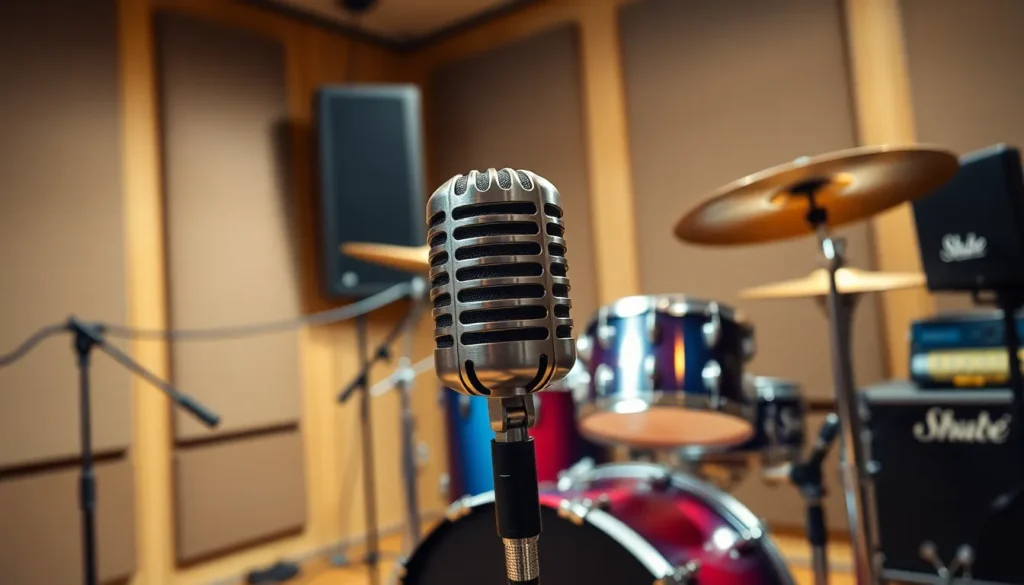
When it comes to capturing the thunderous roar of drums, not all microphones are created equal. Imagine trying to record a heart-pounding solo with a microphone that sounds like it’s underwater. Not exactly the rockstar vibe, right? Drumming microphones are the unsung heroes of the music world, transforming chaotic beats into polished tracks that make listeners tap their feet and nod their heads.
From live performances to studio sessions, the right mic can mean the difference between sounding like a garage band and a Grammy-winning ensemble. Whether it’s a dynamic mic that can handle the power of a kick drum or a condenser mic that captures every nuanced cymbal crash, choosing the right equipment can elevate any drummer’s performance. Get ready to dive into the world of drumming microphones and discover how to unleash the full potential of those rhythmic masterpieces.
Overview of Drumming Microphones
Drumming microphones play a crucial role in capturing the unique sound of drums. Different types cater to specific needs and preferences, ensuring optimal sound quality for high-energy performances. Dynamic microphones excel in handling high sound pressure levels, making them ideal for loud instruments like drums. Their robust build also suits live settings, allowing for reliable usage in various environments.
Condenser microphones, on the other hand, offer an extended frequency response, capturing subtle nuances in the sound. This type works well in studio environments, where detail and clarity become essential. Many professionals utilize a combination of both dynamic and condenser mics to achieve a fuller drum sound.
When selecting microphones, consider the specific requirements of the drum kit. For instance, snare drums benefit from microphones that emphasize sharp transients, while bass drums may require mics that enhance low frequencies. Overhead mics provide a broader picture of the entire kit, capturing cymbals and ambient sound.
Placement significantly impacts the overall recording quality. Optimal positioning of microphones allows for a balanced mix, highlighting the characteristics of each drum. Experimentation with angles and distances helps achieve the desired sound.
Understanding microphone specs, such as sensitivity and frequency range, can guide decisions. Sensitivity affects how well a microphone picks up sounds at varying volumes. A frequency range that covers low to high helps ensure all nuances are captured effectively. Choosing the right microphones enhances not only the sound quality but also the overall recording experience.
Types of Drumming Microphones
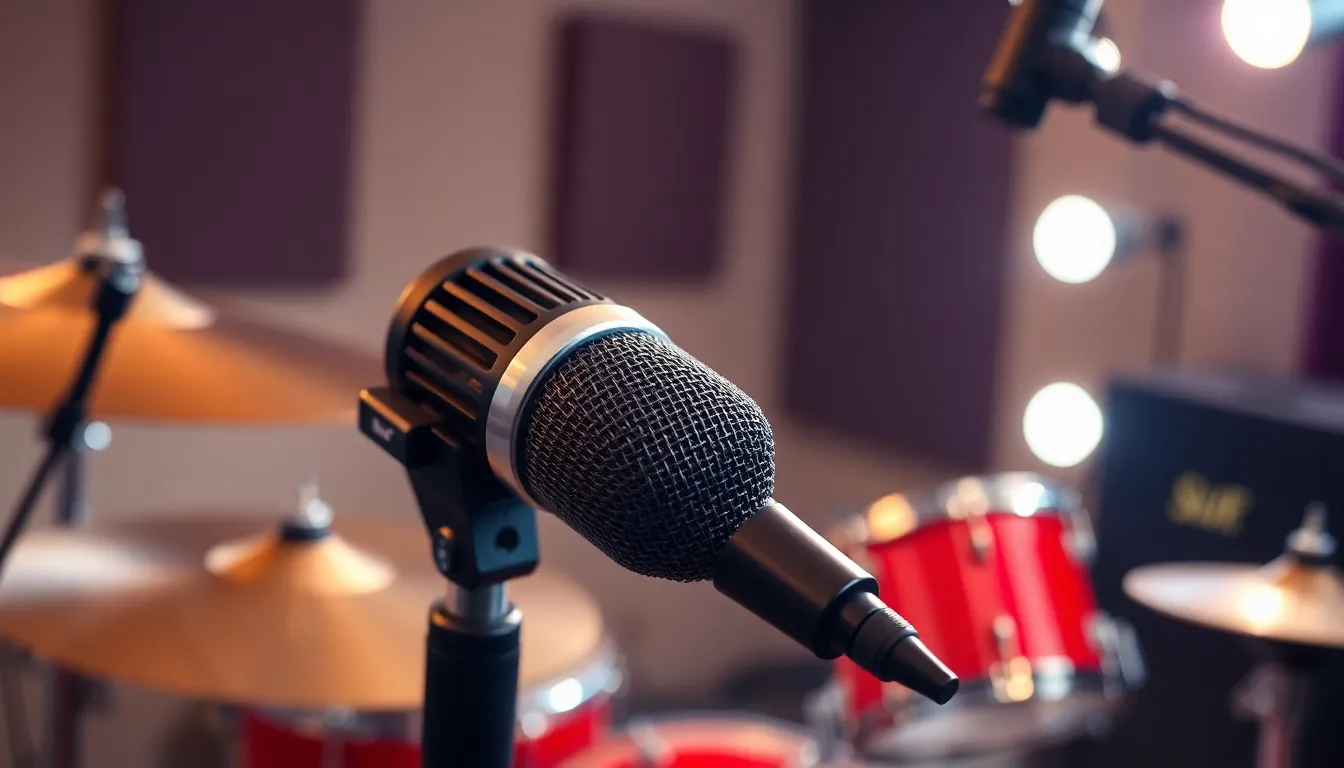
Choosing the right microphone greatly influences the quality of drum recordings. Two primary types of drumming microphones stand out: dynamic microphones and condenser microphones.
Dynamic Microphones
Dynamic microphones excel in high sound pressure environments. They handle loud sources effectively, making them perfect for drums. These mics possess robust construction, ensuring durability during energetic performances. Strong versatility allows for use in live settings as well as studio recordings. Examples include the Shure SM57 and the Audix i5, both widely used by professionals. Their ability to reject ambient noise enhances focused sound capture, vital for drummers.
Condenser Microphones
Condenser microphones offer a different approach by capturing subtle details. Their extended frequency response highlights the nuances in both live and studio settings. These mics function well with overhead and room placements, enhancing overall drum sound. For instance, the AKG C414 and Rode NT1-A are popular choices among sound engineers. They typically require phantom power, which is essential for optimal operation. Accurate sound representation leads to vibrant recordings, making these mics essential for creative projects.
Key Features to Consider
Selecting the right drumming microphone requires attention to specific features. Focus on elements such as frequency response and sensitivity to ensure optimal sound capture.
Frequency Response
Frequency response impacts how well a microphone captures the intricacies of drum sounds. A wide frequency response ensures that low frequencies from kick drums and high frequencies from cymbals are represented accurately. Generally, microphones with a range of 20 Hz to 20 kHz perform well, offering a balanced reproduction of sound. For example, dynamic microphones often excel in lower frequencies, while condenser microphones provide clarity in the higher ranges. Choosing a microphone with a tailored frequency response influences the overall quality of drum recordings, making it essential to match the mic’s response with the intended sound.
Sensitivity and Output Level
Sensitivity denotes how effectively a microphone converts sound waves into electrical signals. High-sensitivity microphones capture subtle details, crucial for genres that emphasize dynamics. Output level relates to the microphone’s signal strength. More robust output levels result in clearer recordings without requiring excessive gain. For drumming, microphones like the Shure SM57 offer a good balance, allowing both loud hits and softer nuances to be captured. Assessing sensitivity and output level is vital in selecting microphones that meet performance needs while maintaining sound integrity.
Best Drumming Microphones on the Market
Selecting the right drumming microphone can elevate recording quality. Various options suit different budgets and needs.
Mid-Range Options
Mid-range microphones offer excellent performance without breaking the bank. The Shure Beta 56A provides a great balance of affordability and sound quality, ideal for snare and toms. Models like the Sennheiser e604 are designed for close-miking applications, ensuring precise sound capture. Additionally, the Audio-Technica ATM650 delivers versatility with its robust build and clear sound reproduction, making it suitable for both live and studio settings. These choices emphasize capturing loud sounds while still accommodating subtler nuances.
High-End Options
High-end microphones excel in performance across the board. The Neumann KM 184 is a standout, known for its exceptional clarity and detail, making it perfect for overhead use. Another option, the AKG C214, provides a warm tone while faithfully reproducing dynamic sounds, ensuring a rich representation of drums. The Shure KSM32 offers versatility and high sensitivity, catering to various studio applications. Investing in these microphones guarantees professional-grade audio quality, catering to serious musicians and producers.
Choosing the right drumming microphones is essential for achieving high-quality recordings. The distinction between dynamic and condenser microphones plays a crucial role in capturing the unique sound of drums. By understanding the characteristics of each type and considering factors like frequency response and sensitivity, musicians can make informed decisions that enhance their performances.
Whether it’s for live shows or studio sessions, the right microphone setup can elevate the overall sound and ensure every hit and nuance is captured effectively. Investing in quality microphones tailored to specific needs not only improves the recording process but also enriches the listening experience for audiences.