

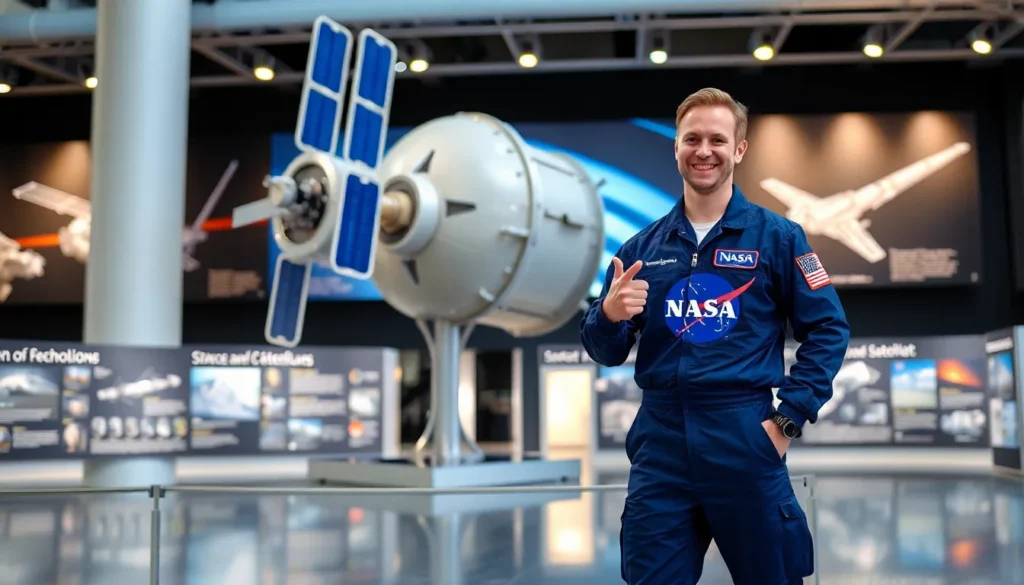




As humanity gazes up at the stars, it’s clear that the future of space technology isn’t just a distant dream—it’s on the verge of becoming our reality. Imagine zipping around the cosmos in a shiny new spacecraft powered by the latest tech, leaving the old rocket engines in the dust. With innovations popping up faster than a cat meme on the internet, the possibilities are endless.
Overview of Future Space Technology
Future space technology promises to reshape the landscape of space exploration. Advancements in propulsion systems may lead to faster travel, reducing the time required to reach distant planets. Reusable spacecraft take center stage, offering cost-effective solutions for repeated missions. Innovations like ion propulsion utilize electric fields to accelerate ions, providing efficient thrust.
Satellite technology will see significant enhancements. Small satellites, known as CubeSats, are increasingly capable of performing complex tasks. These miniaturized platforms improve accessibility for research and commercial purposes. Additionally, satellite constellations will enable global internet coverage, ensuring connectivity in remote areas.
Robotics plays a crucial role in future missions. Autonomous rovers and drones will assist astronauts on extraterrestrial surfaces. These machines perform tasks like sample collection and habitat construction, minimizing human risk.
Artificial intelligence aids in analyzing vast amounts of data collected from space missions. Machine learning algorithms identify patterns and assist scientists in making informed decisions. Enhanced data processing capabilities accelerate research timelines and broaden understanding of celestial phenomena.
Sustainable practices become essential as space exploration expands. Developing technologies for in-situ resource utilization allows astronauts to utilize local materials on planets. This will reduce reliance on Earth supplies, making long-duration missions more feasible.
Collaboration among nations grows increasingly important in future space endeavors. Joint missions foster shared knowledge and resources, enhancing technological development. This cooperative approach ensures that humanity collectively benefits from interstellar advancements.
Future space technology offers infinite possibilities, paving the way for an era of unprecedented exploration and discovery.
Emerging Trends in Space Exploration
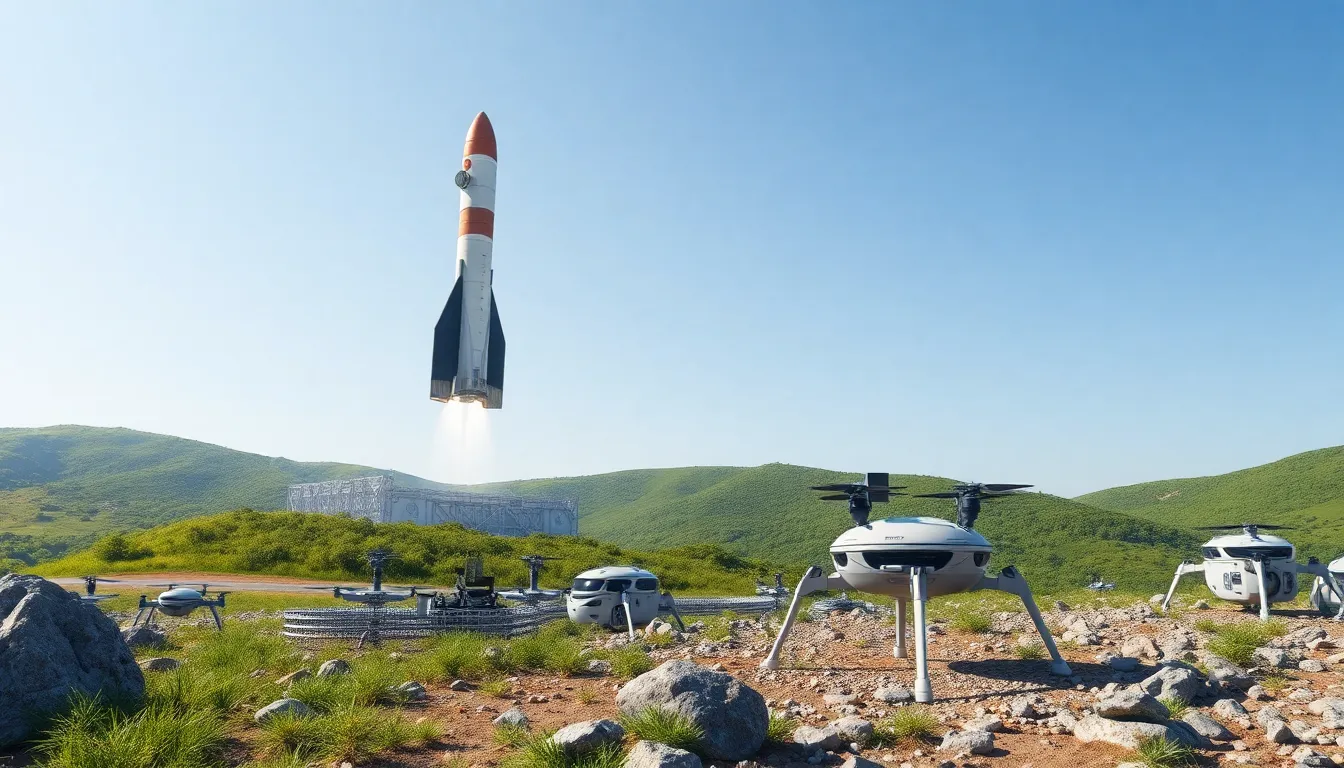
Innovative advancements are driving the next era of space exploration. These trends focus on enhancing capabilities while ensuring sustainability and efficiency.
Reusable Rocket Technology
Spacecraft that can be reused significantly lower mission costs. Companies like SpaceX lead the way with their Falcon 9 rockets, capable of landing back on Earth for refurbishment. Considering multiple launches from a single vehicle, this approach reduces waste and maximizes resources. Additionally, reusable technology encourages more frequent missions, accelerating exploration timelines. Such advancements reshape traditional paradigms and foster both private and public sector participation in space.
Autonomous Drones and Rovers
Autonomous drones and rovers are set to transform surface exploration on other planets. Rovers such as the Perseverance are designed to navigate and conduct experiments in challenging terrains without constant human oversight. Drones enhance this by providing aerial surveys and scouting ahead for crewed missions. These machines operate collaboratively, collecting and transmitting data back to Earth efficiently. With AI integration, they adapt to unforeseen circumstances, ensuring mission success even in unpredictable environments.
Advancements in Space Propulsion
Exploring advanced space propulsion systems reveals transformative technologies shaping future missions. Innovations enhance travel efficiency, which paves the way for deeper interplanetary exploration.
Ion Thrusters and Electrothermal Engines
Ion thrusters utilize electric fields to accelerate ions, generating thrust with remarkable efficiency. These systems consume significantly less propellant compared to traditional chemical engines, allowing for extended missions. Electrothermal engines enhance efficiency by using heat to produce thrust, making them suitable for long-duration space travel. NASA’s Deep Space 1 spacecraft demonstrated the effectiveness of ion propulsion, achieving impressive speeds over extended periods. With capabilities to operate for years without refueling, these technologies offer a sustainable approach for future exploratory missions.
Nuclear Thermal Propulsion
Nuclear thermal propulsion stands out with its potential for high efficiency and rapid travel. These systems use nuclear reactors to heat propellant, producing thrust more effectively than conventional systems. The concept dates back to the 1950s, with projects like NERVA leading initial research. With the ability to potentially cut travel times to Mars by half, this technology presents a significant advantage for crewed missions. Advanced nuclear propulsion concepts, including innovative reactor designs, promise to enhance safety and reliability, making them viable options for ambitious space exploration plans.
The Role of Artificial Intelligence in Space
Artificial intelligence serves as a crucial component in enhancing the efficiency and effectiveness of space missions. It streamlines various processes, making exploration more sophisticated.
AI in Mission Planning
AI optimizes mission planning by simulating various scenarios before launch. Systems analyze data to identify the best launch windows and trajectory choices. Algorithms evaluate gravitational forces from celestial bodies, improving navigating options. Automated systems generate plans that consider equipment capabilities and environmental challenges. Decision-making processes rely on real-time data, increasing the chances of mission success.
Machine Learning for Data Analysis
Machine learning analyzes vast amounts of data collected from space missions at unprecedented speeds. Algorithms extract relevant information from complex datasets, revealing hidden patterns that might otherwise go unnoticed. They enable scientists to make sense of cosmic phenomena faster and more accurately. Continuous learning from new data helps refine models, enhancing future predictions. Explorations become more informed through this advanced analysis, supporting deeper understanding of the universe.
The Future of Space Habitats
Future space habitats will prioritize sustainability, promoting efficient living situations for extended missions. Sustainable living in these environments incorporates recycling systems that process water and waste. Advanced life support systems optimize resource usage, minimizing the need for resupply from Earth. In addition, energy-efficient technologies utilize solar panels and regenerative life support systems to create a self-sustaining ecosystem. Research into closed-loop systems helps ensure minimal environmental impact while supporting human life in space.
Sustainable Living in Space
Sustainable practices will dominate future space habitats, emphasizing efficiency and self-sufficiency. Systems designed for recycling water and air play critical roles, converting waste products into usable resources. These technologies will allow longer missions without reliance on Earth supplies, reducing logistical challenges. Harnessing solar energy enhances power efficiency, as habitats employ solar panels for energy generation. Concepts like bio-regenerative life support systems further promote sustainability by integrating natural processes into habitat design, creating an environment that is both livable and resilient.
Advances in Space Agriculture
Innovations in space agriculture will enable food production in extraterrestrial environments. Techniques such as hydroponics and aeroponics facilitate plant growth without soil, allowing crops to thrive in limited space. Efficient nutrient delivery systems ensure plants receive essential elements, maximizing yield. Research into genetically modified organisms could enhance resilience to harsh environments, optimizing growth rates in low gravity. Projects like NASA’s Veggie experiment explore crop growth on the International Space Station, demonstrating the feasibility of sustainable agriculture in space. Ultimately, these advancements will support long-duration missions and colonization efforts on other celestial bodies.
The future of space technology holds immense promise for humanity’s exploration of the cosmos. With advancements in propulsion systems and reusable spacecraft, missions will become more frequent and cost-effective. Robotics and AI will enhance exploration capabilities, allowing for deeper understanding of distant worlds.
Sustainable practices and innovative habitats will ensure long-term human presence in space. As nations collaborate on ambitious projects, the dream of interplanetary travel and colonization inches closer to reality. Embracing these technologies will not only unlock new frontiers but also inspire generations to reach for the stars. The journey has just begun, and the possibilities are limitless.