





Imagine a world where hopping between planets is as easy as catching a flight to the next city. Future space travel technology promises to turn this dream into reality, transforming the cosmos into humanity’s next playground. With advancements that sound like they’re pulled straight from a sci-fi novel, space enthusiasts are buzzing with excitement about what lies ahead.
Future Space Travel Technology Overview
Future space travel technology aims to make interplanetary travel accessible and routine. Innovations in propulsion, spacecraft design, and life support systems shape this vision.
Key Concepts and Definitions
Space travel refers to the act of journeying beyond Earth’s atmosphere. Propulsion technologies such as chemical rockets and ion drives enhance efficiency. The concept of space colonization focuses on establishing human presence on other planets. Space tourism introduces the idea of commercial travel to orbit and beyond. In addition, reusable spacecraft aim to reduce costs and improve sustainability in space missions. Understanding these concepts is vital to grasping the broader implications of advancements in space travel technology.
Current Trends in Space Exploration
Current trends demonstrate a significant shift toward private investment in space exploration. Companies like SpaceX and Blue Origin lead initiatives focused on reusable launch systems. NASA continues partnerships with commercial entities, fostering innovation. Robotic missions to Mars and beyond capture detailed planetary data, paving the way for human exploration. Emphasis on sustainable practices drives the development of technologies to utilize extraterrestrial resources. Collaboration among nations and private sectors enhances capabilities in exploring the cosmos, laying the groundwork for future missions.
Advancements in Propulsion Systems
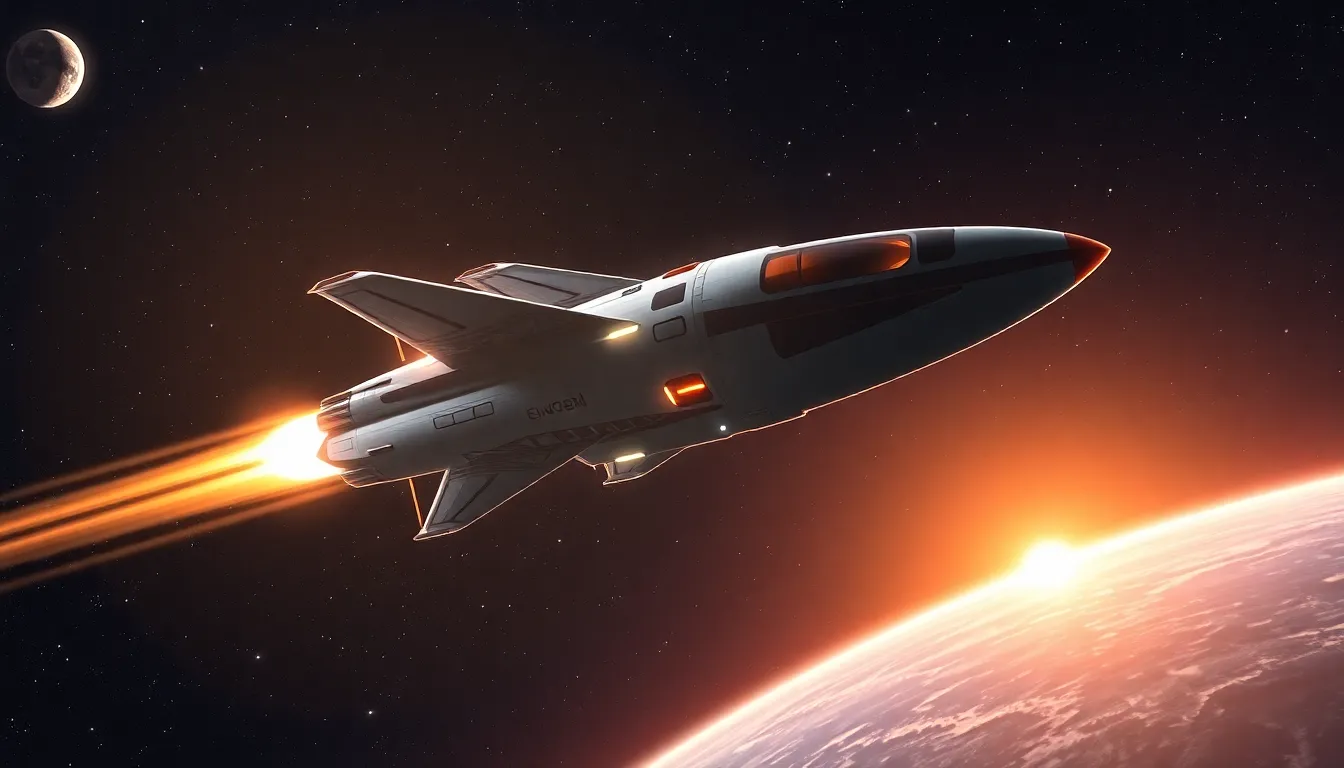
Advancements in propulsion systems play a vital role in shaping future space travel. Modern innovations promise faster, more efficient travel between planetary bodies.
Rocket Technology Innovations
Developments in rocket technology significantly enhance launch capabilities. Companies like SpaceX employ reusable rockets, which lower costs and increase launch frequency. Liquid oxygen and rocket-grade kerosene fuel combinations optimize thrust while reducing carbon emissions. Hybrid propulsion systems, combining solid and liquid propulsion, offer unique advantages in performance and reliability. Innovations such as the Raptor engine aim to push boundaries with a more powerful and efficient design. The introduction of advanced materials in rocket construction further improves performance and safety.
Alternative Propulsion Methods
Alternative propulsion methods emerge as game-changers for future exploration. Ion propulsion systems utilize electric fields to accelerate ions, providing continuous thrust for long-duration missions. Solar sails harness the sun’s energy, allowing spacecraft to glide through space without fuel consumption. Nuclear thermal propulsion offers high efficiency and speed, essential for distant missions such as Mars colonization. Researchers also explore electromagnetic propulsion, which generates propulsion by using magnetic fields. Each of these methods emphasizes sustainability and efficiency, offering new pathways for interplanetary transit.
Human Factors in Space Travel
Human factors play a crucial role in successfully navigating space exploration. They encompass various aspects, including life support systems and health and safety considerations, directly impacting astronauts’ well-being during missions.
Life Support Systems
Life support systems ensure astronauts receive necessary air, water, and food in space. These systems must operate reliably and efficiently for extended durations. Advanced technologies like regenerative life support systems recycle waste and generate oxygen, reducing the need for resupplies. Systems will also include monitoring tools that assess air quality and environmental conditions inside the spacecraft. Efficiently designed life support systems minimize resource consumption while maximizing human comfort, leading to safer and more sustainable journeys.
Health and Safety Considerations
Health and safety considerations are vital when planning for space missions. Astronauts face risks such as radiation exposure, muscle atrophy, and psychological stress. Appropriate countermeasures must address these challenges effectively. For instance, exercise regimens help maintain physical health, while robust mental health support systems provide necessary psychological care during long missions. Ensuring suitable medical facilities on spacecraft enables effective response to health emergencies. Thorough understanding and management of these factors contribute to successful and safe human space exploration.
The Role of AI and Automation
AI and automation play crucial roles in advancing future space travel technology. These innovations enhance efficiency and safety in interplanetary missions.
Spacecraft Navigation
Autonomous navigation systems utilize advanced algorithms to guide spacecraft through complex environments. These systems help analyze real-time data from sensors, optimizing trajectory adjustments. Satellite navigation employs AI to improve accuracy and reliability, reducing human error. Machine learning techniques predict potential obstacles, ensuring safer travel paths. Enhanced GPS systems will facilitate smoother landings and arrivals, ultimately contributing to successful missions.
Robotics in Space Missions
Robotic systems are revolutionizing space exploration by performing tasks that reduce human risk. Automated rovers explore celestial surfaces, gathering significant data and conducting experiments without direct human intervention. AI-driven robotic arms assist in assembling equipment and repairing spacecraft components. These technologies increase mission efficiency and enable scientists to conduct research in environments that would be hazardous for humans. Remote-controlled drones are also emerging, providing aerial reconnaissance for better understanding of unexplored terrain.
Sustainable Space Travel Practices
Sustainable practices are essential for future space travel. Innovations in technology focus on minimizing ecological footprints while maximizing efficiency.
Renewable Energy Sources
Solar power stands out as a leading renewable energy source for spacecraft. It generates electricity through solar panels, significantly reducing reliance on traditional fuels. Using solar sails enhances propulsion in deep space, capturing sunlight and converting it into thrust. Researchers explore advancements in nuclear fusion technology, which promises an efficient energy solution. This method could provide long-duration missions with a sustainable power source, eliminating the need for large fuel reserves.
Waste Management Solutions
Effective waste management becomes crucial for sustainable space travel. Systems designed for recycling waste minimize resource consumption. Advanced composting techniques transform organic material into usable nutrients, supporting food production in space. These systems not only reduce waste but also enhance life support capabilities. Innovations in water purification technologies further ensure astronauts have access to clean drinking water. Implementing thoughtful waste management practices directly impacts mission duration and sustainability.
The future of space travel technology holds immense promise for humanity. As advancements continue to unfold, the dream of interplanetary travel becomes more tangible. Innovations in propulsion systems and spacecraft design are set to revolutionize how people explore the cosmos.
With a strong emphasis on sustainability and safety, future missions will prioritize the well-being of astronauts while minimizing ecological impacts. The integration of AI and automation will enhance efficiency and reduce risks, paving the way for successful exploration.
As private companies and governmental agencies collaborate, the vision of routine space travel inches closer to reality. The journey into the unknown is just beginning, and the possibilities are truly limitless.