



In the world of live events, sound is king. Imagine a concert where the band is rocking out, but all you hear is a muffled echo and the occasional feedback squeal. Not exactly the vibe anyone’s going for, right? That’s where live sound equipment steps in like a superhero, ready to save the day.
Overview of Live Sound Equipment
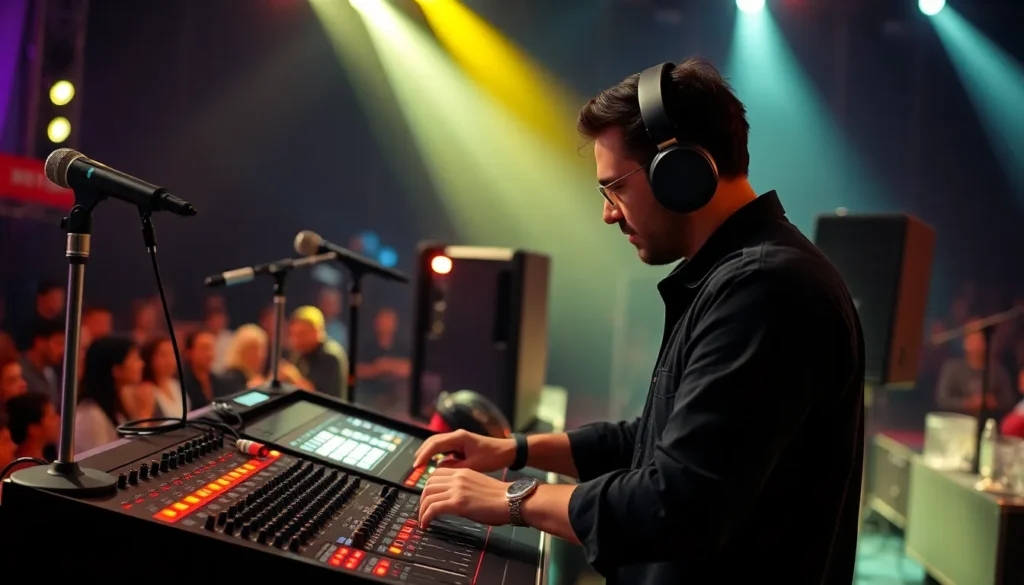
Live sound equipment consists of various components that work together to amplify audio during events. Microphones capture sound and convert it into an electric signal. Sound mixers blend multiple audio sources, allowing for precise control over volume and tone.
Speakers project the amplified audio to the audience, ensuring clarity and volume. Subwoofers enhance low-frequency sounds, providing depth to music and sound effects. Amplifiers increase the power of audio signals, enabling loud output without distortion.
Feedback monitors give performers the ability to hear themselves, facilitating better vocal performance and stage presence. Cable systems carry the audio signals among different components, ensuring connectivity.
Instruments like DI boxes help connect guitars and keyboards directly to the sound system, delivering high-quality sound. Portable mixers offer flexibility for smaller events, allowing easy setup and teardown.
Wireless systems provide freedom of movement for performers, eliminating the need for cables. These devices enhance the overall experience, allowing artists to engage more with their audience.
Live sound equipment configurations vary based on venue size and type of event. A small coffee shop might require minimal gear, while a large stadium demands more advanced systems. Proper equipment selection directly impacts audio quality and audience engagement, making it vital for event success.
Investing in high-quality live sound equipment pays off, ensuring events resonate with audiences. It’s essential to choose equipment that matches the specific needs of each performance for optimal results.
Types of Live Sound Equipment
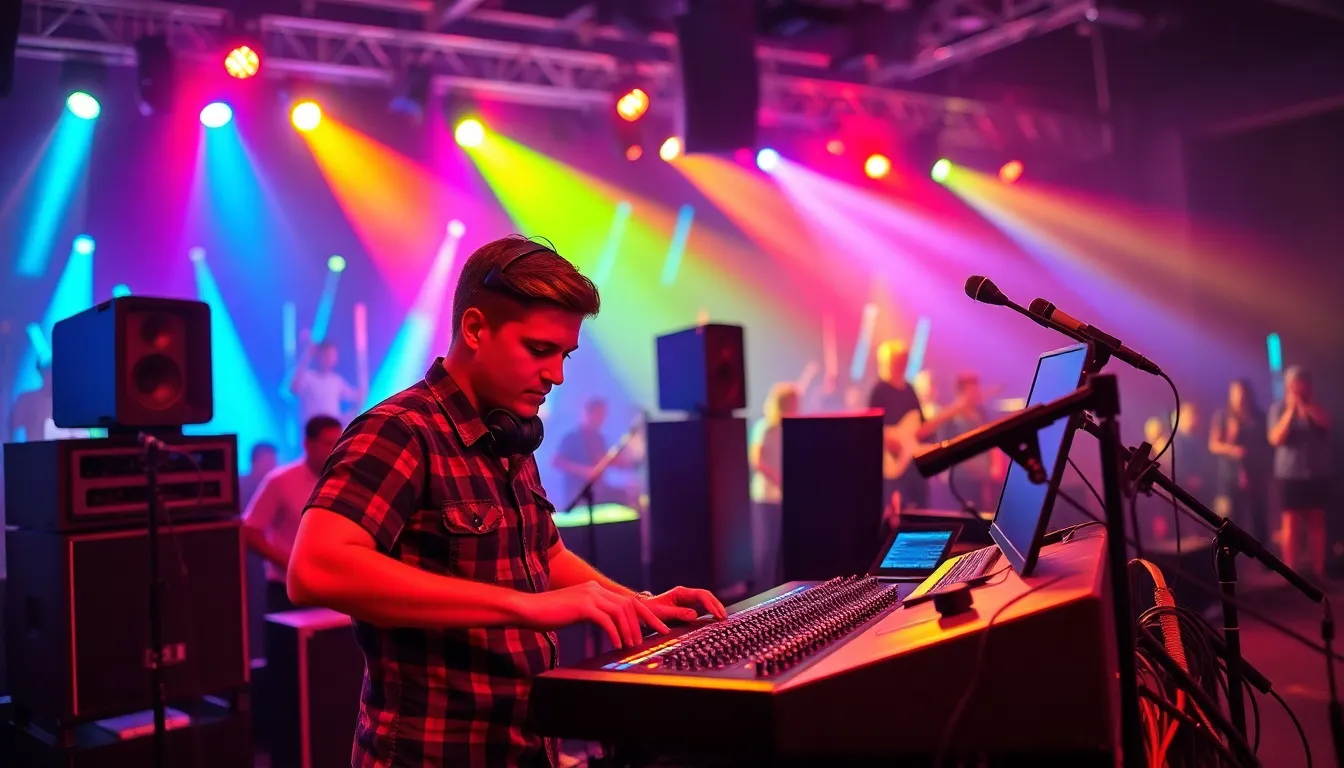
Live sound equipment encompasses various components critical for delivering high-quality audio at events. Each piece plays a specific role in creating an engaging auditory experience.
Speakers
Speakers project amplified sound to the audience. Typically, PA speakers distribute audio clearly across large crowds. Powered speakers combine an amplifier and speaker, streamlining setup. Floor monitors enable performers to hear themselves during the performance, providing essential feedback. Subwoofers enhance low-frequency sounds, adding depth to music and enhancing overall audio quality.
Mixers
Mixers blend multiple audio sources into a cohesive output. Each mixer features controls for adjusting volume, tone, and effects for individual channels. They can also route signals to different outputs, ensuring optimal sound balance. Digital mixers offer advanced features like automation and effects processing, increasing versatility. Analog mixers remain popular for their straightforward use, delivering warm sound preferred by some audio professionals.
Microphones
Microphones capture sound, acting as the first step in the audio chain. Dynamic microphones excel in high-volume environments, while condenser microphones provide finer detail for vocals and acoustic instruments. Lavaliers and handheld microphones offer performers different options for movement and expression. Wireless microphones enhance mobility, allowing performers to engage with audiences freely. Proper selection ensures clarity and fidelity, crucial for impactful performances.
Amplifiers
Amplifiers increase audio signal power, ensuring sound reaches every corner of the venue. Different types of amplifiers suit various applications. Class AB amplifiers are popular for their balance of efficiency and sound quality. Integrated amplifiers serve as a complete solution, combining preamp and power amp functions. Understanding amplifier specifications helps select the right unit to match speaker capabilities and venue size, achieving optimal audio performance.
Choosing the Right Live Sound Equipment
Selecting appropriate live sound equipment depends on various factors critical to event success. Understanding the venue and budget forms the backbone of effective sound choices.
Understanding Your Venue
Venue size greatly influences equipment selection. Larger venues often require powerful speakers and advanced mixing consoles to accommodate bigger crowds. Smaller venues may only need portable systems capable of delivering adequate sound without overwhelming the space. Acoustics play a vital role, too. Sound reflections and absorption from walls, ceilings, and floors can dramatically affect audio quality. Therefore, assessing the venue’s layout helps determine the ideal speaker placement and monitor positions for optimal sound distribution.
Budget Considerations
Budget constraints dictate equipment options and quality. Setting a clear budget early ensures smart allocation across essential components like microphones, speakers, and mixing boards. High-quality, entry-level equipment may suffice for smaller events, while larger productions necessitate more advanced gear. Understanding rental versus purchase costs can inform decisions. Rentals allow access to top-tier equipment without a hefty investment upfront, while purchases make sense for frequent use. Allocating funds for additional gear such as cables and monitors ensures complete setups enhance audio experience.
Best Live Sound Equipment Brands
Several brands stand out in the live sound equipment industry, known for their reliability and performance.
Shure excels in the microphone segment, offering dynamic and condenser options for various applications.
Yamaha is highly regarded for mixers and audio interfaces, providing both analog and digital solutions that cater to different venue sizes.
Sennheiser specializes in wireless systems, ensuring that performers maintain mobility while delivering exceptional sound quality.
Mackie produces durable speakers and mixers that are favored in both small gigs and larger concerts, known for their user-friendly features.
QSC delivers professional-grade amplifiers and powered speakers, enabling high-output sound that resonates even in larger spaces.
Electro-Voice offers a range of loudspeakers that enhance audio clarity and consistency, making them a preferred choice for venues of all types.
Behringer stands out with budget-friendly mixers and monitors, making quality sound accessible for smaller productions.
PreSonus provides award-winning digital mixers and recording software, suitable for both live performances and studio settings.
Soundcraft is recognized for its mixing consoles, characterized by intuitive designs that cater to audio engineers at all skill levels.
Allen & Heath manufactures high-quality mixers for professional environments, integrating advanced features to meet the demands of live sound engineers.
Selecting the right brand often depends on specific needs and event requirements. Understanding each brand’s strengths helps ensure optimal audio quality for live events.
Maintenance and Care of Live Sound Equipment
Proper maintenance significantly extends the life of live sound equipment. Regular cleaning prevents dust accumulation, which can impair performance. Inspecting cables for wear and fraying protects both equipment and users from potential hazards.
Performing routine checks on microphones ensures optimal audio capture. Checking battery levels frequently in wireless systems prevents unexpected shutdowns during events. Maintaining mixers and amplifiers in a climate-controlled environment prevents damage from extreme temperatures.
Scheduling professional servicing for intricate components like digital mixers reduces the risk of malfunction. Keeping a written log of maintenance activities helps track the history and condition of each item.
Storing equipment in protective cases or racks reduces wear and tear when not in use. Using appropriate power supplies and surge protectors safeguards against electrical issues.
Training personnel on proper handling techniques enhances equipment longevity. Educating users about the specific needs of each piece of gear fosters better care and prevents misuse.
Additionally, investing in quality equipment often leads to easier maintenance due to more durable materials. Keeping updated manuals for each device assists in understanding the maintenance requirements specific to each item. Establishing a routine can streamline maintenance, ensuring all components remain in optimal working condition.
Prioritizing maintenance not only protects the investment but also guarantees consistent audio quality during events. Supporting these efforts with the right tools, like cable testers and cleaning supplies, contributes to reliable performance.
Investing in high-quality live sound equipment is essential for creating memorable events. The right gear not only enhances audio quality but also elevates the overall experience for both performers and audiences. Understanding the specific needs of each venue and event type allows for better equipment selection.
Regular maintenance and care of sound equipment ensure longevity and consistent performance. By prioritizing these aspects, event organizers can create an engaging atmosphere that resonates with attendees. With the right tools and knowledge, achieving exceptional sound quality is within reach, making every live event a success.