






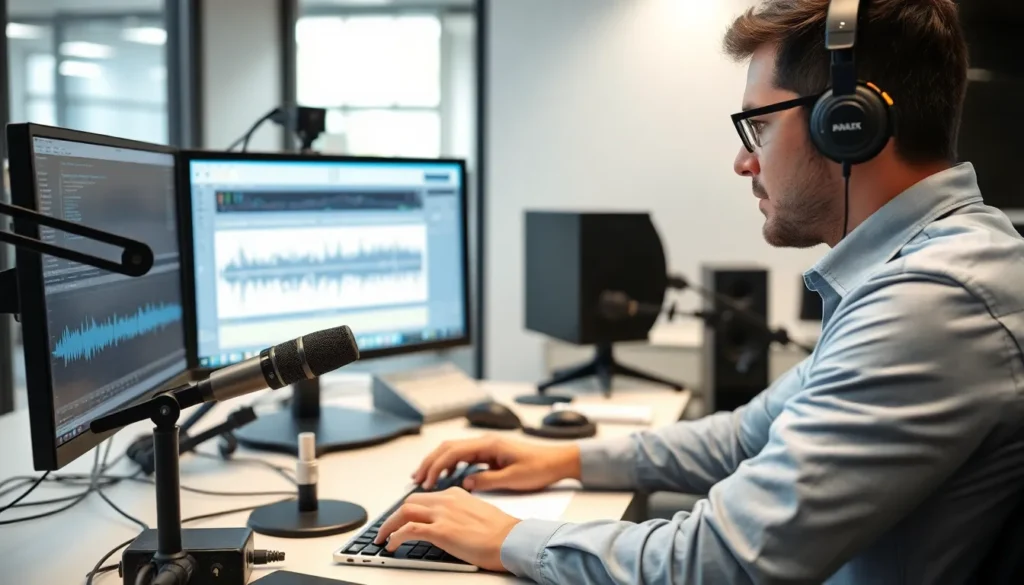
In a world filled with noise, understanding sound is like finding the golden ticket in a candy factory. Sound analysis isn’t just for audio engineers or musicians; it’s a powerful tool that can transform how we perceive the world around us. Whether it’s deciphering the subtle hum of a malfunctioning appliance or analyzing the latest chart-topping hit, mastering sound can make anyone a maestro in their own right.
Overview of Sound Analysis
Sound analysis entails examining audio characteristics to extract meaningful information. It encompasses techniques ranging from basic listening skills to advanced data processing. Individuals can identify specific frequencies, waveforms, and other audio features with sound analysis. This practice finds applications in various fields including music production, engineering, and environmental science.
Understanding sound enhances one’s interaction with surroundings. For instance, detecting anomalies in mechanical devices illustrates sound analysis in everyday life. Musicians utilize sound analysis to refine their performances and compositions. Furthermore, researchers study environmental sounds to gauge ecosystem health.
Several methods exist for executing sound analysis. These include spectral analysis, waveform analysis, and time-domain analysis. Each method serves different purposes depending on the context and desired outcomes. Selecting appropriate software tools is vital for effective sound analysis. Popular options include MATLAB, Audacity, and Adobe Audition, which provide various analytical features.
As sound analysis evolves, machine learning introduces innovative approaches. Advanced algorithms now assist in recognizing complex audio patterns. Consequently, businesses benefit from automated audio diagnostics in customer service and quality control. Overall, sound analysis plays a critical role across multiple sectors. Its relevance continues to grow as technology advances and industries seek to optimize their audio experiences.
Importance of Sound Analysis

Sound analysis plays a crucial role in many aspects of modern life. Its significance extends beyond audio professionals, impacting diverse fields and enhancing everyday experiences.
Applications in Various Fields
Sound analysis finds applications in numerous sectors, showcasing its versatility. In music production, it helps artists and engineers refine recordings. Environmental science benefits from sound analysis through monitoring wildlife and assessing acoustic pollution. Engineering relies on it for quality control and machine diagnostics. Healthcare applications include analyzing heart sounds or respiratory patterns, providing valuable insights. Furthermore, surveillance systems utilize sound analysis for security measures. Each application underscores the necessity of sound analysis in generating meaningful outcomes.
Benefits of Sound Analysis
Numerous advantages arise from effective sound analysis. Enhanced understanding of sound characteristics improves problem-solving skills, such as identifying appliance malfunctions. Increased auditory awareness fosters greater appreciation for music and sound design. Moreover, sound analysis aids in efficient communication, providing clarity in various environments. Businesses gaining insights through sound analysis can improve customer experiences and streamline operations. Ultimately, leveraging sound analysis cultivates a deeper connection with the surrounding world and boosts overall productivity.
Techniques Used in Sound Analysis
Sound analysis employs various techniques to effectively capture and interpret audio data. Two fundamental methods are time-domain analysis and frequency-domain analysis.
Time-Domain Analysis
Time-domain analysis focuses on capturing audio signals as they change over time. It offers insights into amplitude variations, which represent volume over the duration of a sound. By visualizing waveforms, analysts detect patterns, spikes, and anomalies. This technique proves valuable in fields like music production where timing intricacies play a crucial role. It allows audio engineers to assess dynamics, suggesting adjustments for optimal sound quality. Real-time monitoring, commonly employed in live performances, uses time-domain analysis to maintain consistent audio levels.
Frequency-Domain Analysis
Frequency-domain analysis breaks down audio signals into their constituent frequencies. This technique reveals the intricate harmonic structure of sounds, showcasing peaks at specific frequencies. Analysts leverage this information to identify distinct tonal qualities, ensuring sound clarity. Tools like spectrograms illustrate frequency distributions over time, essential for diagnosing issues in audio engineering. In music production, frequency-domain analysis aids in equalization, allowing producers to enhance or suppress certain elements within a mix. This method benefits environmental scientists too, enabling the assessment of sound pollution across different frequencies.
Tools for Sound Analysis
Various tools enhance sound analysis across different applications. These tools encompass both software solutions and hardware instruments.
Software Solutions
Multiple software options facilitate sound analysis tasks. MATLAB stands out for its robust data processing capabilities, allowing users to perform advanced algorithms for thorough acoustic investigations. Audacity offers a user-friendly interface, making it ideal for beginners interested in waveform visualization and editing. Adobe Audition, meanwhile, excels in providing professional-grade features, including multitrack editing and noise reduction tools. Other programs, such as SpectraPLUS and Reaper, cater to specific analytical needs, enriching the user experience with versatile features. Overall, selecting appropriate software is vital for achieving accurate and insightful results in sound analysis.
Hardware Instruments
Several hardware tools assist in capturing and analyzing sound. Microphones range from handheld options to specialized models, designed for precision in various environments. Sound level meters measure audio intensity, crucial for assessing noise pollution in urban areas. Audio interfaces connect microphones and instruments to computers, ensuring high-quality audio input for analysis. Additionally, spectrum analyzers provide visual representations of frequency data, informing decisions in music production and environmental monitoring. Utilizing the right hardware instruments allows for cohesive and effective sound analysis.
Sound analysis is a powerful tool that transcends professional boundaries. By mastering its techniques and applications, individuals can significantly enhance their auditory experiences and problem-solving abilities. The diverse uses of sound analysis in fields like music production, engineering, and healthcare illustrate its growing importance in modern society.
As technology continues to evolve, the relevance of sound analysis will only increase. Embracing this skill opens up new avenues for understanding the world, fostering creativity, and driving innovation. With the right tools and techniques, anyone can harness the potential of sound analysis to improve their everyday life and professional endeavors.