






In a world where music can be as unpredictable as a cat on a hot tin roof, sound synthesizers emerge as the ultimate sonic wizards. These magical machines transform mere electrical signals into lush landscapes of sound that can make even the most stoic listener tap their feet. Whether you’re an aspiring musician or just someone who enjoys the occasional jam session, synthesizers offer a playground of creativity that’s hard to resist.
Overview of Sound Synthesizers
Sound synthesizers serve as innovative devices that produce sound through electronic generation. They manipulate audio waves in ways that create everything from simple tones to complex, textured sounds. Various types of synthesizers exist, including analog, digital, and modular systems, each offering distinct characteristics and capabilities.
Users can modulate different parameters, such as pitch and amplitude, to shape sounds according to their creative vision. Synthesis techniques, including subtractive, additive, and frequency modulation, provide musicians with tools to generate unique sonic palettes. With modulation sources like LFOs (low-frequency oscillators) and envelopes, sound designers can add movement and dynamics.
Synthesizers often incorporate numerous controls and interfaces. Knobs, sliders, and keys allow for real-time interaction, enabling musicians to intuitively explore sound possibilities. Software synthesizers offer additional flexibility, allowing for integration with digital audio workstations (DAWs) and extensive sound libraries.
Genres like electronic, pop, and film score heavily utilize sound synthesizers for their distinct soundscapes. Artists and producers value these tools for their versatility and ability to push musical boundaries. Top synthesizer brands like Moog, Korg, and Roland contribute to this landscape by developing instruments that have become industry standards.
With growing accessibility, the DIY synthesizer market fosters experimentation among music enthusiasts. Modular synthesizers, in particular, encourage hands-on learning and personalized setups. Overall, sound synthesizers continue to influence and inspire musicians across the globe.
Types of Sound Synthesizers
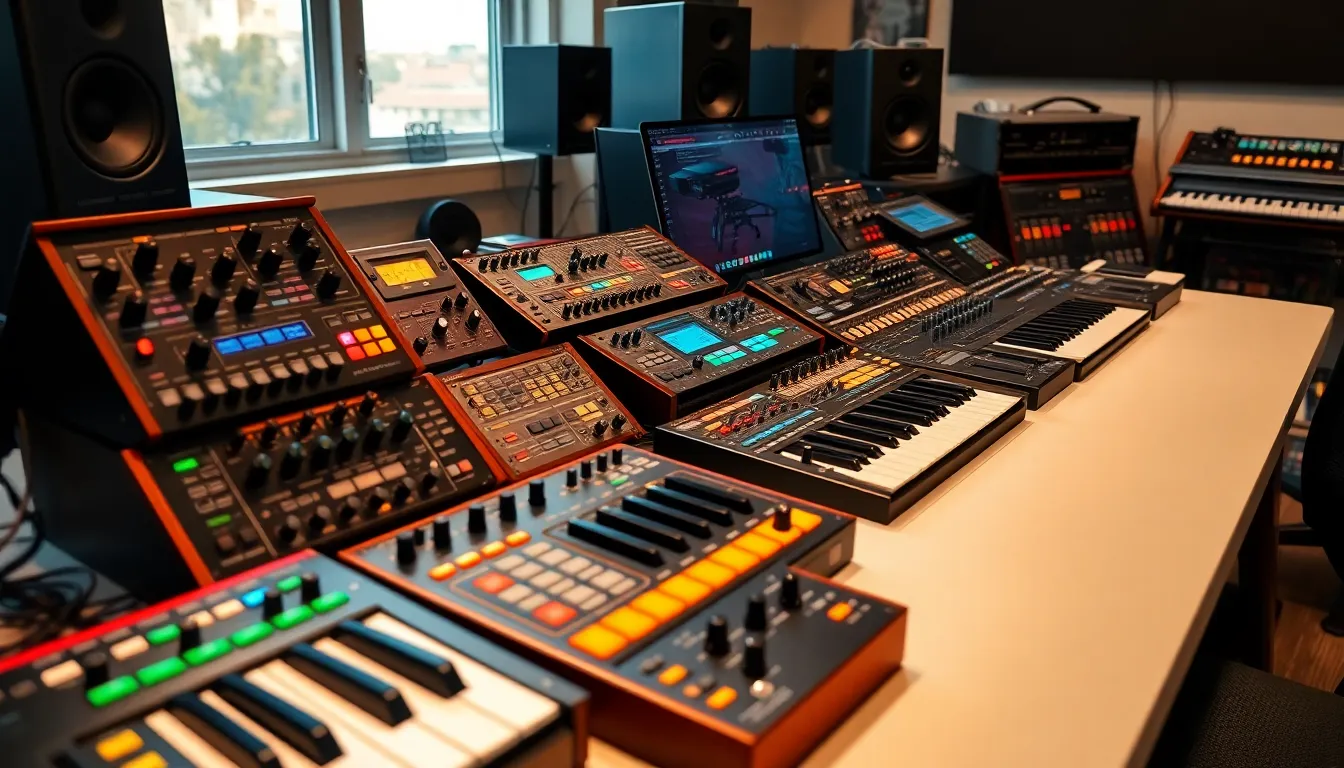
Sound synthesizers come in various forms, each with distinct features and applications. Understanding these types enhances the ability to create unique sound experiences.
Analog Synthesizers
Analog synthesizers utilize voltage-controlled components to generate sound. They produce rich, warm tones through analog circuits and are renowned for their organic quality. Musicians appreciate the hands-on control these devices offer, allowing real-time manipulation of sound parameters. Classic models like the Moog Minimoog and Roland SH-101 showcase this unique sound profile. Many users prefer the intuitive interface, where knobs and sliders help craft and shape signals dynamically. These synthesizers often feature subtractive synthesis, emphasizing waveform modification to create a wide array of sounds.
Digital Synthesizers
Digital synthesizers generate sound using digital signal processing. They often provide greater versatility in terms of sounds and effects, appealing to modern producers. Commonly found in both hardware and software formats, these instruments incorporate techniques like wavetable synthesis and physical modeling. Digital synthesizers like the Yamaha DX7 and Korg M1 became iconic for their ability to create complex timbres. Users often enjoy built-in effects and editing options that expand creative possibilities. Enhanced features like sequencing and sampling capabilities support intricate sound design, making them suitable for various genres.
Modular Synthesizers
Modular synthesizers consist of separate components that users connect to create custom configurations. This flexibility encourages experimentation and personalized setups. Each module serves a specific function, such as sound generation, modulation, or effects processing, enabling unique signal paths. Users can combine oscillators, filters, and sequencers based on their artistic vision. Notable modular systems, like those from Eurorack and Doepfer, allow for extensive customization. The hands-on nature of patching cables and adjusting parameters provides a tactile experience, enhancing sonic exploration. Modular synthesizers foster a vibrant DIY community, empowering musicians to build tailored instruments suited to their creative style.
Key Features of Sound Synthesizers
Sound synthesizers possess several key features that define their functionality and versatility. These components enable musicians to explore endless soundscapes.
Oscillators
Oscillators serve as the foundation of sound generation in synthesizers. They produce waveforms such as sine, square, and sawtooth, each contributing distinct characteristics to the sound. Different oscillator types allow for the creation of various tones, ranging from smooth to harsh. Users can layer multiple oscillators for rich, complex textures. Additionally, frequency modulation techniques further expand the sonic possibilities, enabling the creation of unique timbres.
Filters
Filters shape the overall sound by modifying frequency content. Low-pass filters allow low frequencies to pass while reducing higher frequencies, creating warmth. High-pass filters, on the other hand, eliminate low frequencies, resulting in a clearer, brighter sound. Band-pass filters isolate a specific frequency range for more focused tones. Users can adjust parameters like cutoff frequency and resonance, providing control over the filter’s effect on sound, enhancing creativity and expressiveness.
Envelopes and LFOs
Envelopes control how a sound evolves over time. The ADSR envelope, which includes attack, decay, sustain, and release phases, defines the timeline of a sound’s amplitude. Low-Frequency Oscillators (LFOs) add modulation to parameters like pitch, amplitude, or filter cutoff. These can create vibrato or tremolo effects, adding depth and movement to the sound. By combining these elements, musicians achieve dynamic sound variations, enriching their sonic palette.
Popular Sound Synthesizers on the Market
Sound synthesizers come in many forms, making them accessible to various musicians and enthusiasts. Notable brands lead the field with quality and innovation.
Synthesizer Brands
Moog remains a standout brand known for analog synthesizers characterized by rich, warm tones. Korg’s offerings include a wide range of products, from compact models aimed at beginners to professional-grade synths. Roland is another industry leader, merging modern technology with classic sounds, particularly through flagship models like the JUNO series. Yamaha also plays a key role, providing versatile digital synthesizers that appeal to a broad audience. Each brand brings unique features and sound design capabilities to the market.
Innovative Models
Innovative models continually emerge, pushing the boundaries of sound creation. The Korg Minilogue XD features an analog engine combined with digital effects, offering expansive sonic possibilities. Another noteworthy product, the Moog Subsequent 37, delivers rich bass and melodic textures due to its dual oscillators and advanced modulation capabilities. Behringer’s Neutron synthesizer stands out with its semi-modular architecture, making it versatile for various applications. The Arturia MicroFreak merges digital oscillators with a unique touch interface for expressive performances. These models illustrate the diverse options available today for sound exploration.
Sound synthesizers continue to transform the music landscape with their remarkable ability to create and manipulate sound. They invite both seasoned musicians and newcomers to explore their creativity and push the boundaries of sonic expression. With a variety of types and innovative features, synthesizers provide endless opportunities for crafting unique soundscapes.
The growing DIY culture around modular synthesizers encourages experimentation and personalization, allowing users to develop their own distinctive setups. As technology advances, the role of sound synthesizers in various music genres will only expand, inspiring future generations of artists. Embracing these powerful tools opens a world of possibilities for anyone passionate about music.